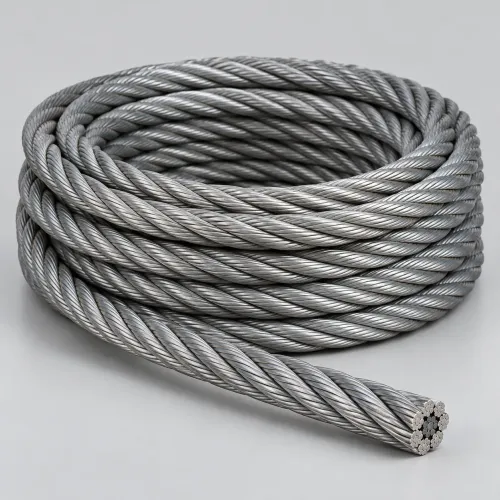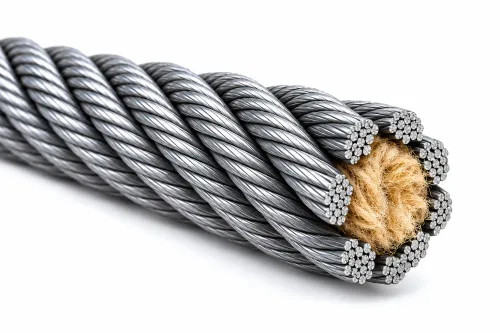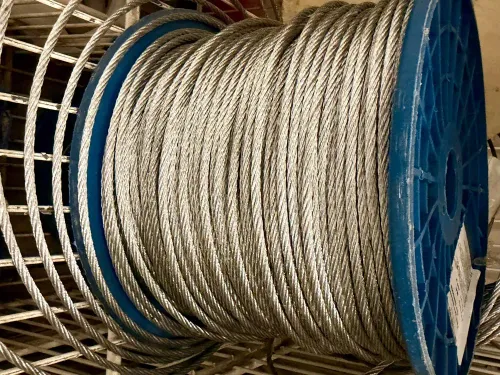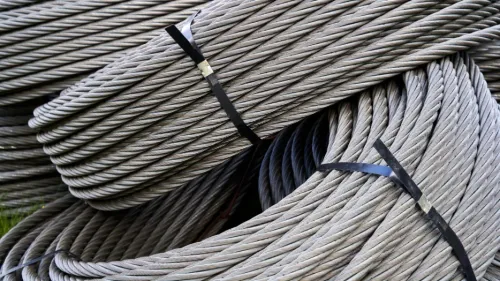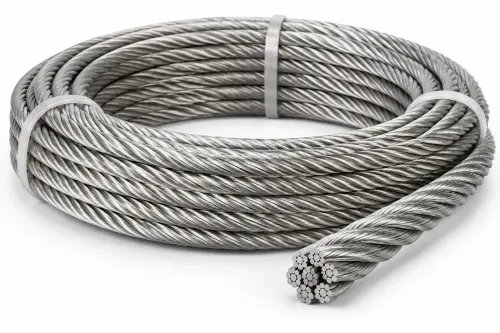
“Steel wire rope” refers to a strong, flexible cable made by twisting multiple steel wires into strands, and then twisting those strands around a core. It’s widely used where high strength and durability are required.
🔩 Key Features
High tensile strength – can handle heavy loads
Flexibility – bends without breaking
Durability – resistant to wear, fatigue, and corrosion (especially if galvanized or stainless)
Safety – commonly used in lifting and load-bearing applications
🧱 Construction
A typical steel wire rope has:
Wires → smallest components
Strands → groups of wires twisted together
Core → center of the rope (fiber core or steel core)
⚙️ Common Types
Galvanized steel wire rope – corrosion-resistant
Stainless steel wire rope – used in marine or harsh environments
Fiber core rope (FC) – more flexible
Independent wire rope core (IWRC) – stronger and more heat-resistant
🏗️ Applications
Cranes and hoists
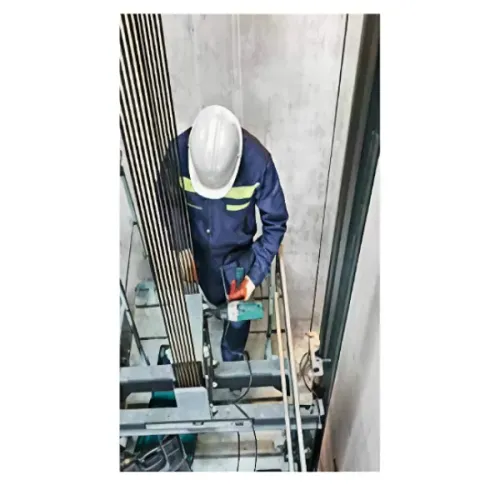
Elevators
Suspension bridges
Mining and construction
Marine and rigging operations
📏 Example Sizes
Diameter: 1 mm to 100+ mm
Constructions: e.g., 6×19, 7×7, 7×19 (number of strands × wires
Keywords